The Cortisol Diet: What to Eat to Lower Cortisol Naturally
What you eat directly controls how much cortisol your body produces. Here are the specific foods, meal timing principles, and nutrients that lower cortisol — and the ones that quietly spike it.
Most cortisol advice focuses on stress management techniques — meditation, breathing exercises, saying no to things. These matter. But what most guides completely overlook is that every single meal you eat either raises or lowers your cortisol. The food choices you make from the moment you wake up directly influence how much cortisol your adrenal glands produce, how long it stays elevated, and whether your body shifts into fat-storage mode. For perimenopausal women, where the HPA axis is already under hormonal pressure, getting the diet right is not optional — it is the foundation.
The cortisol-diet connection works through three primary mechanisms. First, blood sugar regulation: every time blood sugar drops sharply, the adrenal glands release cortisol to mobilise stored glucose. This is why skipping meals, eating refined carbohydrates alone, or doing fasted cardio all spike cortisol — they create the blood sugar instability that forces a cortisol response. Second, micronutrient depletion: chronic stress depletes specific nutrients (particularly vitamin C, magnesium, B5, and zinc) that are required for adrenal function. When these are low, the adrenal glands become hyperreactive. Third, inflammation: ultra-processed foods, seed oils, and excess sugar drive systemic inflammation, which activates the HPA axis and keeps cortisol chronically elevated. The cortisol diet addresses all three mechanisms simultaneously.
The most important meal of the day for cortisol: breakfast
Cortisol is naturally highest in the first hour after waking — this is called the cortisol awakening response (CAR), and it is normal and necessary. The problem arises when you extend this morning cortisol spike by skipping breakfast or eating a high-carbohydrate breakfast (toast, cereal, fruit juice, a banana) that causes a rapid blood sugar rise followed by a crash. That crash triggers a second cortisol spike, setting a dysregulated pattern for the entire day. The cortisol-lowering breakfast is built around protein and fat: eggs with avocado, Greek yoghurt with walnuts and berries, or a smoothie with protein powder, nut butter, and spinach. Aim for at least 25–30g of protein at breakfast. This stabilises blood sugar through the morning, blunts the cortisol awakening response, and prevents the mid-morning energy crash that most women attribute to 'needing more coffee'.
The top cortisol-lowering foods
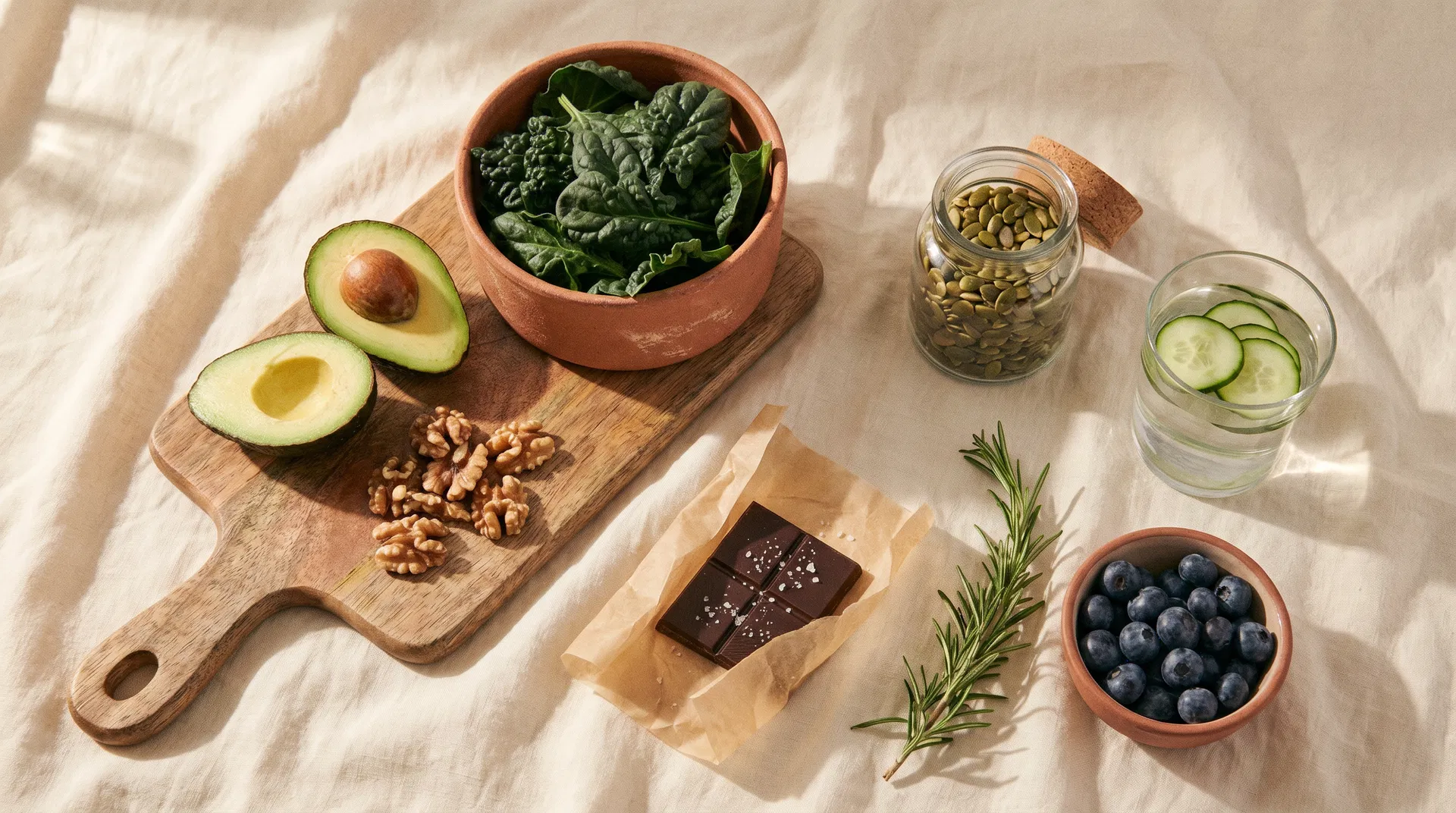
Dark leafy greens (spinach, kale, Swiss chard) are among the most powerful cortisol-lowering foods because they are rich in magnesium — the mineral most directly involved in HPA axis regulation. Magnesium acts as a natural brake on the stress response: it inhibits the release of ACTH (the hormone that triggers cortisol production) and supports GABA receptor activity, which calms the nervous system. Most perimenopausal women are deficient in magnesium, which is why supplementing with magnesium glycinate alongside a magnesium-rich diet produces faster results than either approach alone.
Fatty fish (salmon, sardines, mackerel) provide omega-3 fatty acids, which reduce the neuroinflammation that drives HPA axis hyperreactivity. A 2010 randomised controlled trial published in Psychosomatic Medicine found that omega-3 supplementation significantly reduced cortisol reactivity to stress in healthy adults. For perimenopausal women, omega-3s also support estrogen metabolism and reduce the inflammatory load that compounds hormonal dysregulation.
Avocados are one of the most nutrient-dense cortisol-lowering foods available. They provide monounsaturated fats that stabilise blood sugar, potassium that supports adrenal function, and B vitamins (particularly B5 and B6) that are essential for cortisol metabolism. Half an avocado at breakfast or lunch is one of the simplest dietary interventions for cortisol belly.
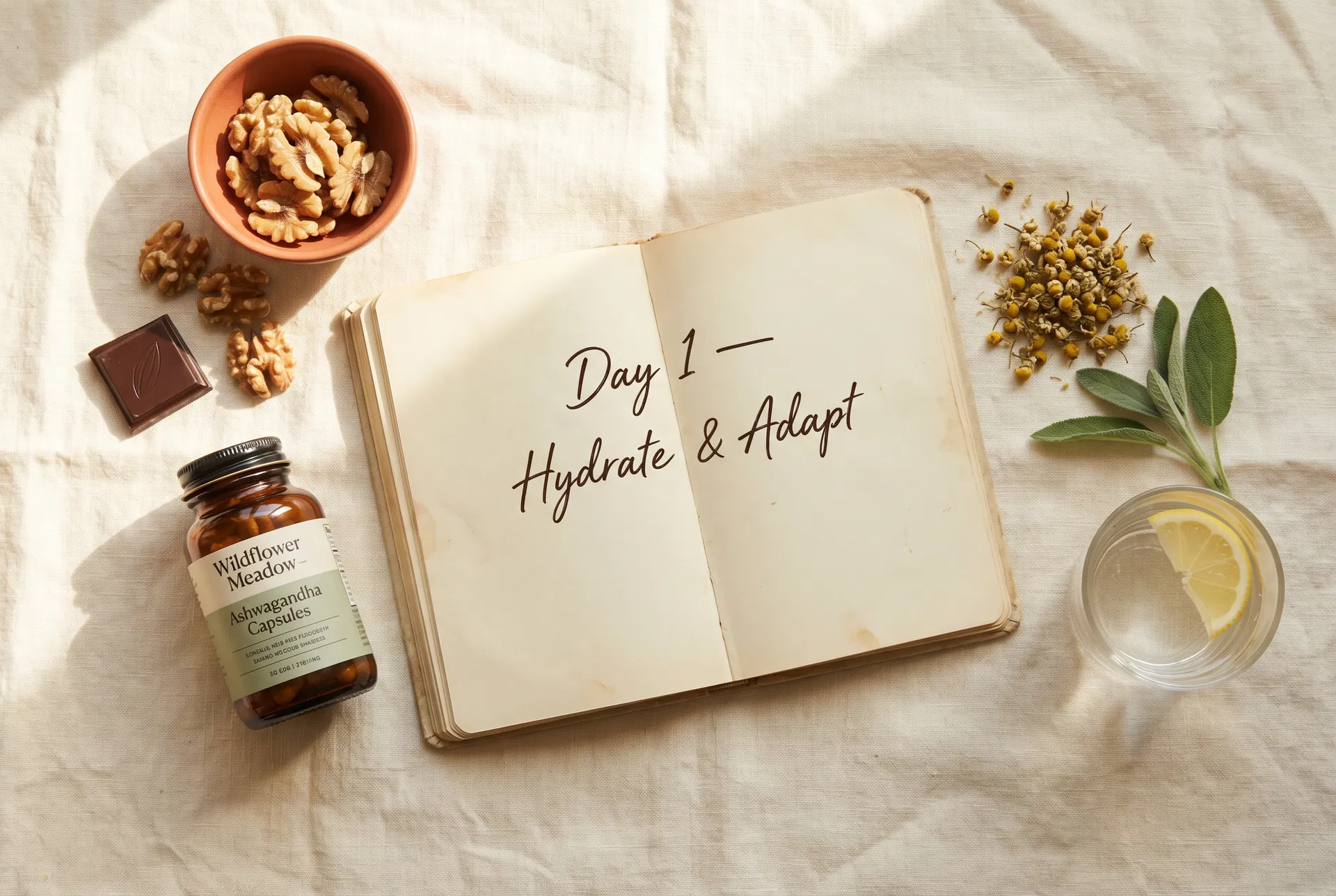
Walnuts are uniquely valuable because they provide both omega-3 fatty acids (ALA) and melatonin precursors, addressing both the daytime cortisol curve and the nocturnal cortisol dysregulation that causes the 3am wake-up. A small handful (about 30g) as an afternoon snack is one of the most evidence-backed dietary interventions for cortisol regulation.
Dark chocolate (70% cacao or higher) contains flavonoids that reduce cortisol and adrenaline responses to stress, as demonstrated in a 2009 study in the Journal of Proteome Research. It also provides magnesium and theobromine, which has a gentler, longer-lasting stimulant effect than caffeine without the cortisol spike. A 20–30g piece in the afternoon is a legitimate cortisol-lowering strategy, not a guilty pleasure.
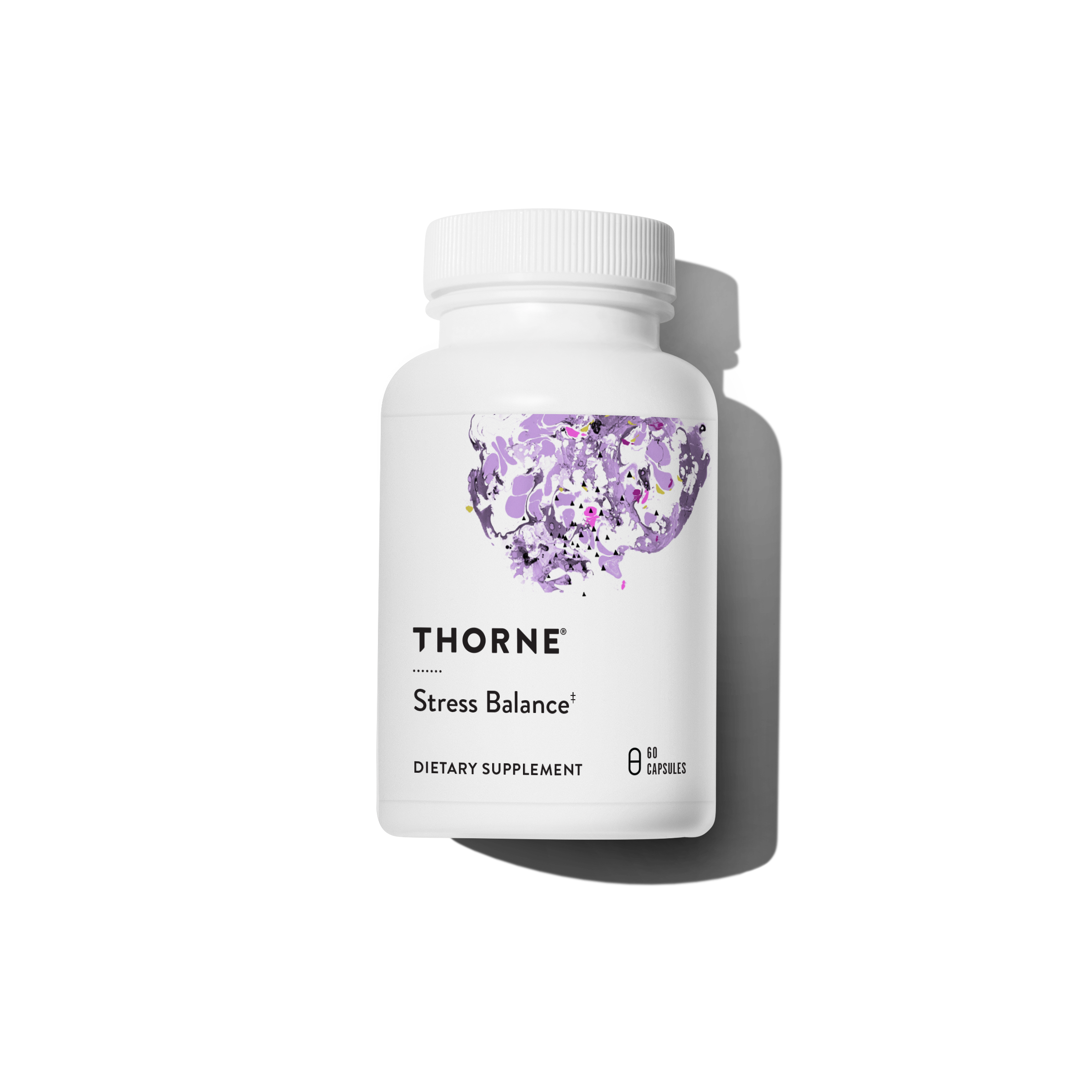
Thorne Stress Balance
KSM-66 ashwagandha + adaptogens + adrenal vitamins — the supplement that bridges diet and cortisol regulation
4.7/5 · 5,800+ reviews
- ✓KSM-66 ashwagandha — clinically proven to reduce serum cortisol in 60 days
- ✓Rhodiola & Eleuthero for HPA axis resilience and sustained energy
- ✓B5, B6, Vitamin C & Zinc — the adrenal micronutrients most depleted by chronic stress
#ad — I earn a small commission at no extra cost to you. I only recommend products I personally use.
Also Recommended
The 28-Day Cortisol Reset
A complete day-by-day protocol combining diet, adaptogens, sleep, and nervous system regulation to lower cortisol belly naturally
See the 28-Day Cortisol Reset →Start here — just $17
The 7-Day Cortisol Belly Reset — Quick-Start Protocol
Everything in this post — the food framework, morning & evening routines, and 5 key supplements — organised into a focused 7-day plan. Instant PDF download.
Get Instant Access — $17 →
Pumpkin seeds are one of the richest dietary sources of zinc, which is essential for adrenal function and progesterone production. Chronic stress depletes zinc rapidly, and zinc deficiency amplifies the cortisol response to stressors. Two tablespoons of pumpkin seeds daily provides approximately 20% of the recommended daily zinc intake.
What to eat less of: the cortisol-spiking foods
Refined carbohydrates and sugar are the most significant dietary drivers of cortisol dysregulation. White bread, pasta, rice, pastries, and sugary drinks cause rapid blood sugar spikes followed by crashes, each of which triggers a cortisol release. This does not mean eliminating carbohydrates — it means pairing them with protein and fat to slow absorption and prevent the spike-crash cycle. A bowl of white rice alone spikes cortisol; the same rice eaten with salmon, avocado, and leafy greens does not.
Caffeine directly stimulates the adrenal glands to produce cortisol. A single cup of coffee raises cortisol by approximately 30% in the hour after consumption. For women with already-elevated cortisol, this means that the morning coffee habit is actively compounding the cortisol belly problem. This does not mean eliminating coffee entirely — it means timing it correctly. Drinking coffee before 9am, when cortisol is already at its natural morning peak, amplifies a spike that is already happening. Waiting until 9:30–10am, after the cortisol awakening response has peaked naturally, produces the same alertness effect with significantly less adrenal stimulation. If you are experiencing significant cortisol symptoms, switching to matcha (which contains L-theanine to buffer the caffeine response) for four to six weeks can produce a noticeable reduction in anxiety and belly bloating.
Alcohol is a cortisol disruptor that is often overlooked in hormone health conversations. Even moderate alcohol consumption (one to two drinks per evening) raises cortisol, disrupts sleep architecture, and suppresses progesterone production — the three mechanisms that drive the most common perimenopausal symptoms. If you are working to reduce cortisol belly, alcohol is the single dietary change that will produce the most visible results in the shortest time.
Meal timing: the cortisol diet is as much about when as what
The timing of meals matters as much as their composition for cortisol regulation. The three most important timing principles are: never skip breakfast (eating within 60–90 minutes of waking prevents the blood sugar drop that triggers a cortisol spike), eating every three to four hours to maintain blood sugar stability throughout the day, and having a small protein-and-fat snack before bed (such as a tablespoon of almond butter or a small handful of walnuts) to prevent the nocturnal blood sugar drop that causes the 3am cortisol surge. This last intervention alone resolves the 3am wake-up for many women within two to three weeks.
If you want to see how your current stress and cortisol levels compare, the [Stress Level Assessment](/stress-level-calculator) gives you a personalised picture in about three minutes. And if you are ready for a structured approach that combines the cortisol diet with adaptogen support, sleep optimisation, and nervous system regulation into a single day-by-day plan, the [28-Day Cortisol Reset](/28-day-cortisol-reset) was built specifically for perimenopausal women navigating this pattern. You can also read about the [5 signs your belly fat is cortisol-driven](/blog/cortisol-belly-fat-signs) to understand whether diet is the right place to start.
This post contains affiliate links. I only recommend products I personally use and trust. This is not medical advice — always consult your healthcare provider before making changes to your diet or supplement regimen, particularly if you have a pre-existing condition or are taking prescription medication.
From the researcher's desk
I built everything in this post into a focused 7-day protocol.
The 7-Day Cortisol Belly Reset covers blood sugar stabilisation, adaptogen timing, sleep architecture repair, and nervous system regulation — in one structured PDF you can start today.
Instant PDF download · 60-day money-back guarantee
Complete the 5-Part Cortisol Series
Signs → Diet → Exercise → Sleep → Reset. Each post builds on the last.

5 Signs Your Belly Fat Is Cortisol-Driven
7 min read

The Cortisol Exercise Plan: Why HIIT Makes Cortisol Belly Worse
8 min read

The Cortisol Sleep Protocol: Fix the Hormone That Wakes You at 3am
8 min read
How to Reset Your Cortisol in 7 Days: A Day-by-Day Guide
9 min read
Did this help? Share it with a friend 🌿
Did this help? Share it with a friend 🌿
Research & Sources
- Incollingo Rodriguez AC, Epel ES, White ML, Standen EC, Seckl JR, Tomiyama AJ Hypothalamic-pituitary-adrenal axis dysregulation and cortisol activity in obesity: A systematic review. Psychoneuroendocrinology. 2015;62:301-18, 2015. https://pubmed.ncbi.nlm.nih.gov/26356039/
- Chandrasekhar K, Kapoor J, Anishetty S A prospective, randomized double-blind, placebo-controlled study of safety and efficacy of a high-concentration full-spectrum extract of ashwagandha root in reducing stress and anxiety in adults. Indian J Psychol Med. 2012;34(3):255-62, 2012. https://pubmed.ncbi.nlm.nih.gov/23439798/
- Kavyani Z, Musazadeh V, Fathi S, et al. Efficacy of the omega-3 fatty acids supplementation on inflammatory biomarkers: An umbrella meta-analysis. Int Immunopharmacol. 2022;111:109104, 2022. https://pubmed.ncbi.nlm.nih.gov/35914448/
- Boyle NB, Lawton C, Dye L The Effects of Magnesium Supplementation on Subjective Anxiety and Stress — a Systematic Review. Nutrients. 2017;9(5):429, 2017. https://pubmed.ncbi.nlm.nih.gov/28445426/
More on Nutrition